

Case Study - Staff Consultation and Internal Engagement
Staff consultation is essential—but it’s not just about asking questions, it’s about asking them in the right way. The purpose of the engagement should determine the approach: whether a creative, hands-on session to spark ideas, or a more traditional format to gather considered feedback.
In this article, we share three projects where we used different methods depending on the context—showing when to lean into fun and when structure works best.
T2 Next Engagement Project - Empowering Baggage Handlers

The T2 Next Engagement Project was initiated by Australia Pacific Airports Melbourne (APAM) and ARUP, with Conversation Co supporting ARUP with stakeholder engagement efforts. The project centered on the rollout of T2 Next—the next-generation baggage handling system for the International T2 Terminal—designed to increase capacity, improve tracking, and enhance overall operational efficiency. Recognising that these significant upgrades would directly impact baggage handlers, the engagement program was structured to actively involve frontline staff, ensuring that their insights and concerns were captured and addressed throughout the project lifecycle.
-
Diverse Workforce and Shift Rotation: Baggage handlers work a 24-hour roster, making consistent communication a challenge. The project team had to engage staff across multiple shifts and from different contractor organisations (e.g., Dnata, Menzies, Swissport, and Virgin Handlers).
Communication Gaps: The baseline sentiment survey revealed that nearly half of the respondents were unfamiliar with the upgrade details and changes. Many rated recent communications very poorly, emphasising a significant need for clearer, more accessible information.
Change Management: With rapid technological upgrades and process changes, there was uncertainty regarding how these changes would affect daily operations, job roles, and safety—contributing to hesitancy and apprehension among staff.
-
The engagement program was designed to work around the baggage handlers’ busy schedules by adopting a place-based approach:
Intercept Surveys: Conducted during off-peak hours across various shifts to capture real-time feedback.
Diverse Communication Channels: The surveys explored communication preferences, revealing a strong desire for updates via email, in-person briefings, and printed materials.
Tailored Engagement: By targeting different contractor groups and considering tenure differences, the program ensured that both new and experienced staff could voice their concerns and suggestions.
-
The survey found that 47.7% of respondents felt they didn’t know much about the project, while a combined 32.7% expressed that they were either glad progress was being made or wanted additional information.
With 56.2% rating communications as very poor, the project team learned that there is an urgent need to develop targeted, multi-channel communication tools—such as FAQs, regular progress updates, and induction materials for new hires—to bridge the information gap.
Feedback regarding potential changes to work processes (e.g., adjustments to the belt system and impacts on job roles) highlighted practical areas for operational improvement. This enabled the project team to consider staff-driven suggestions such as modernising the belt system and enhancing workplace amenities for greater efficiency.
By directly involving baggage handlers in the feedback loop, the project not only gathered actionable data but also reinforced the message that the staff’s voice is vital to the successful implementation of T2 Next. This has helped foster a sense of ownership and participation among employees.
The T2 Next Baggage Handlers Engagement Project shows how targeted staff engagement can uncover strategic and operational improvements in complex infrastructure projects. This early phase of the project has laid the foundation for future stages ensuring that staff feel better informed and connected to the overall implementation program. This case study demonstrates that when staff are actively engaged, they become essential partners in change.
Employee Enterprise Agreement - Staff Consultation
A local Council was preparing for Enterprise Agreement negotiations. To support a more efficient process with better outcomes, Council enlisted the expertise of Conversation Co. The goal was to engage with employees before formal negotiations began, identify key concerns, and gain insights into what aspects of the current Agreement were effective and which areas required improvement.
-
For this project, we used a mixed-methods methodology:
Quantitative data through an online survey, accessible to all employees.
Qualitative data through six employee workshops each targeting a specific area of Council.
-
Different employees and teams had different conditions and clauses within their employment, this made it difficult to engage all staff within some conversations.
Perceived differences or advantages to different employment groups (e.g. those allowed to work from home vs those who must be on-site) were challenging to navigate.
Some staff found it difficult to attend the workshops due to needing to be on-site or on-call.
-
Providing different streams of engagement (survey and workshops) allowed employees an opportunity to participate in a manner that they were comfortable with.
Providing a spread of days/times for the workshops increased the opportunity for staff to attend.
Providing facilitation through an independent expert increased the sense of trust and transparency in the process.
A mixture of presentation, small group work, and whole-group sharing enhanced the workshop feedback.
Utilising the broad engagement findings from the survey, assisted in starting the conversations within the workshops.
A strong communications plan led by the Council increased the reach of the survey.
-
We heard from 331 participants in this engagement process (269 surveys completed and an additional 62 workshop participants),
There was good representation of staff from different teams, bandings and locations.
A detailed engagement report was provided which outlines key themes for further investigation and discussion.
Council has utilised the engagement findings to prepare for the formal negotiations and investigate opportunities to address key themes.
Council has, or intends to, improve policies and processes related to the Employee Agreement based on the findings.
Investing in employee engagement early can assist organisations to understand their needs and can have significant impacts including:
Employees feeling heard and respected
Improved processes and policies
Increased efficiency of formal negotiations; and
Improved outcomes for employees.
Staff Consultation - What does the new CEO need to know?
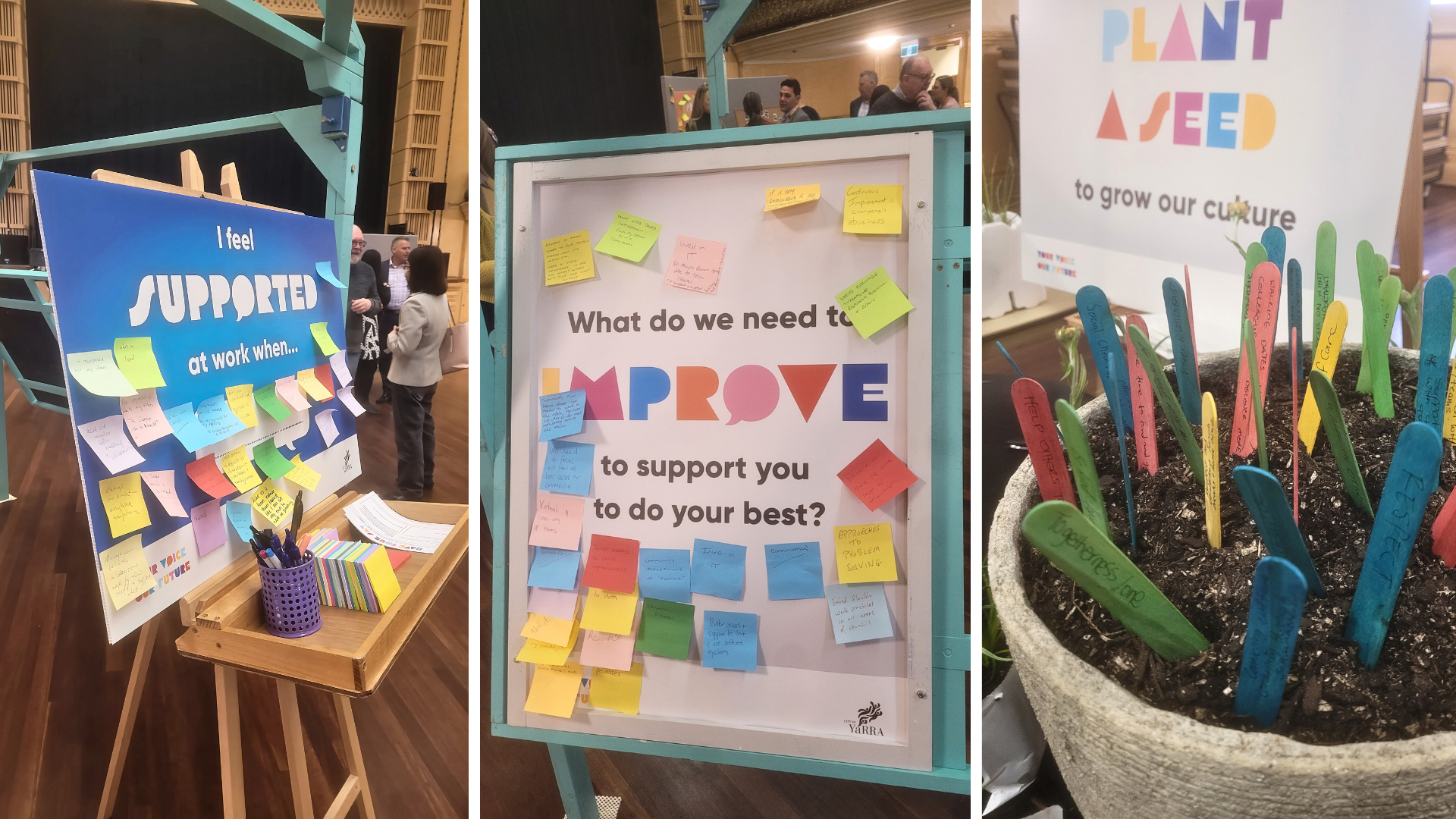
How do you find out what’s really going on in a new organisation? What are the unspoken frustrations? What ideas do staff have that they haven’t had an opportunity to suggest? Where are the pressure points?
Conversation Co designed and led a Staff Expo to encourage staff from all levels of the organisation to participate. We created seven different activity stations around a large hall, a combination of fun and genuine conversations.
You CAN ask your CEO that..Inspired by the ABC television series You Can’t Ask That, we put the new CEO in a comfy chair and invited staff to sit down opposite him/her to ask any question they wished. Brave questions were encouraged!
-
Staff were asked to record their feedback to these key questions:
If you were CEO for the day, what would you do first?
What would make you feel proud to work here?
How can the organisation support you to do your best? (the classic stop, start, change question)
What does the future organisation feel like? How will it function?
-
Instead of speed dating, we set up speed conversations. We facilitated a series of 15 minute conversations between two staff members, sitting down opposite each other.
-
Staff were given a native plant seedling, small pot and potting mix. Whilst they literally planted a seed, they also recorded their thoughts on how they personally could create a positive organisational culture.
The Staff Expo was designed to be appealing, encouraging and respectful of the different ways people like to give feedback and participate in group activities. The Expo was used in combination with the more traditional staff engagement activities - an online survey and team-based focus groups. The investment in designing and coordinating the Expo paid off in positive word of mouth and useful insights for the new CEO.
