

Towards Smoke Free and Vape Free Cities
At Conversation Co, we know that real social change doesn’t start with policy, it starts with people. We have undertaken a number of projects creating changes to smoking and vaping across Victoria.
We were proud to have partnered with the City of Melbourne on its innovative journey to become a smoke-free city by 2025. Together, we co-designed and delivered engagement that wasn’t about collecting feedback, it was about reshaping what is possible when communities are involved in change.
From the original project Towards Smoke Free Melbourne policy to making the Queen Victoria Market a smoke and vape-free precinct, the message from the community is clear: it is time for cleaner air, healthier spaces and a more inclusive approach to public health.
Towards Smoke Free Melbourne
More than 1200 residents, workers, business owners, young people, visitors and those with lived experience of smoking and vaping participated. And we held space for these complex conversations.
Through community pop-ups, online surveys, targeted workshops and a deliberative panel, we explored people’s hopes, concerns, and realities.
77% of participants supported the smoke-free vision.
Community members prioritised smoke-free areas around transport hubs, schools and health services.
A deliberative panel shaped strategies to protect vulnerable groups, promote quitting and build community awareness through respectful messaging.
We didn’t just ask what people thought, we asked what would make this fair, what would make it work and who might be left behind if we get this wrong.
Learn more about this project here: Smoke-free Melbourne Policy.Read the case study: City of Melbourne — Towards Smoke Free Melbourne.Smoke-free and Vape-free Queen Victoria Market
QVM is a place of tradition, trade and daily life and also one of the city’s busiest, most loved spaces. When management requested the precinct become smoke and vape free, Council knew the change couldn’t happen without consultation. Over 1200 people had their say through surveys, submissions and intercept conversations.
More than 75% supported making the Queen Victoria Market smoke and vape free.
Even among people who smoke or vape, nearly half were supportive or indifferent.
Many traders and visitors said this would improve their experience and protect people from harmful exposure.
Observational research backed this up, even low levels of smoking still affected air quality and ambience.
Importantly we also explored perceptions of fairness and supported nuanced conversation about designated areas, signage, and how changes would be rolled out.
Breathe Easy
In partnership with the Wellington Shire Council and East Gippsland Shire Council, we worked alongside the Gippsland Region Public Health Unit (GRPHU) to engage young people and the broader community in region wide conversations about smoking, vaping and the future of community health.
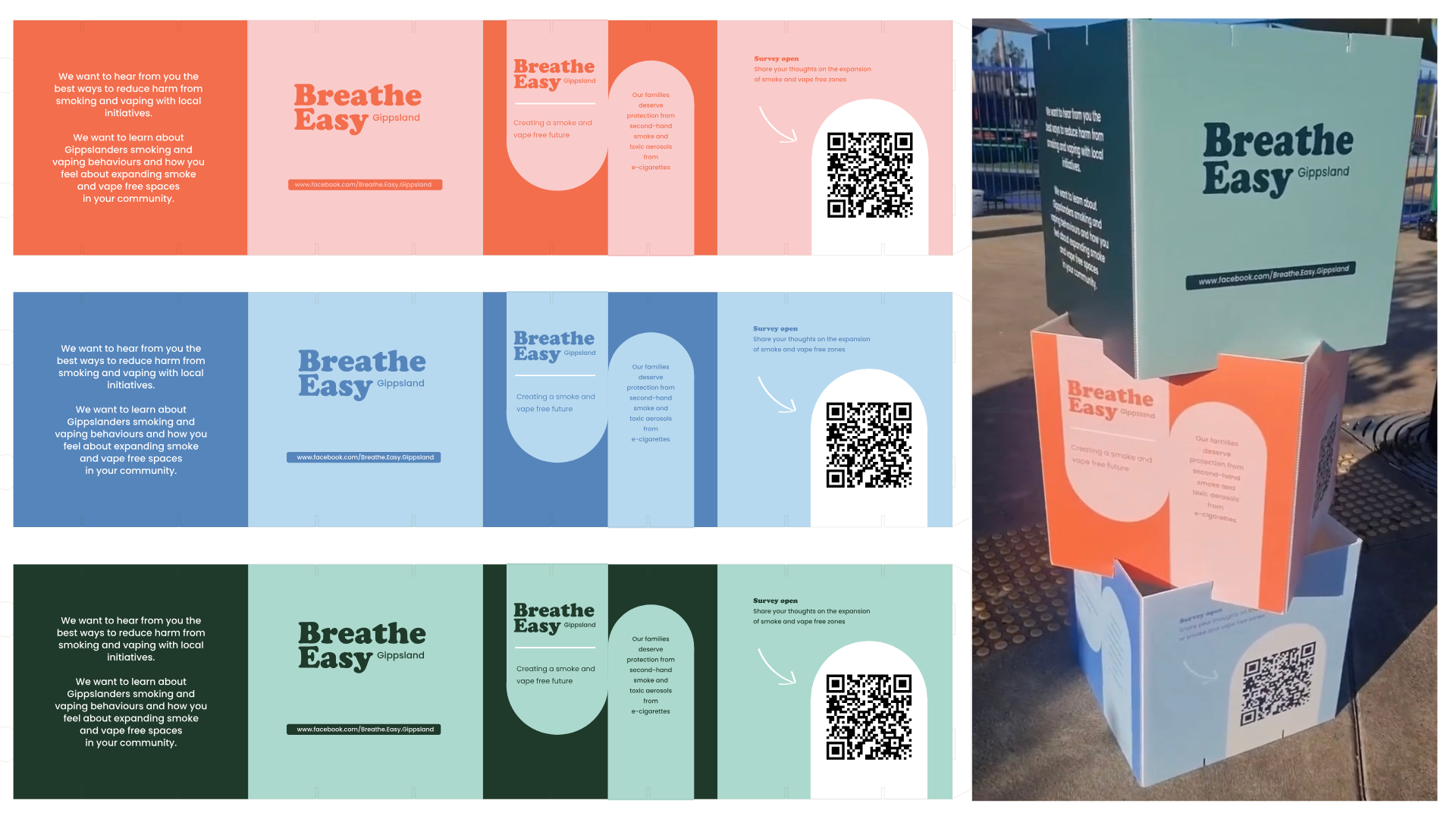
We developed a hands-on engagement plan for our clients to deliver, with creative activities, and interactive props, we ran two pop-ups at local schools and in the community. The focus was to hear directly from young people and the broader community about their views on smoke and vape free zones, explore why young people vape, and understand what might support them to reduce or avoid vaping altogether.
Conversation Co delivered the initial pop-ups at the schools and in the community, upskilling the Council staff to deliver more engagement throughout the region. A community consultation guide helped staff to understand their role, what good engagement looks like and required skills such as getting people engaged, asking open-ended questions, dealing with conflict and keeping themselves and others safe.
From the school engagements, 98 students had their say:
57% strongly supported or supported more being done to reduce harm caused by smoking or vaping.
12.7% would definitely quit or smoke and vape less 10.9% if more smoke free and vape free zones were introduced in the community.
Friends (35.1%) is the top reason provided why young people vape.
Support needed to reduce or stop vaping was access and cost followed by ‘removing the coolness’ of vaping and education.
The real impact
When we talk about community engagement as a lever for social change, this is what we mean. Not only did these projects help shape healthier public spaces, they also helped:
Build public trust in decision making
Include underrepresented voices in policy development
Reduce stigma by treating smokers with dignity
Create a roadmap that other councils can follow
What these projects taught us about change
Across these projects, some clear insights emerged, not just for smoke and vape free polices, but for how to build people-powered change anywhere.
Representation isn’t easy, but it’s essential. Smokers and vapers were underrepresented in face-to face forums. Stigma, lack of anonymity and timing all played a role. This reiterated the importance of offering multiple, low barrier ways to participate, including anonymous online options.
Engagement builds shared ownership. When people shape the solution, they are more likely to support and defend it. Our deliberative panel didn’t just validate the Council's vision, they improved it. From inclusive signage to education first approaches for vulnerable groups, the panel offered ideas that wouldn’t have emerged through consultation alone.
Communication must do the heavy lifting. Most participants weren’t aware of existing smoke-free zones. This highlights a need for clear, accessible and multilingual communications to raise awareness and shift the social norms over time.
Even light-touch engagement matters. At the Queen Victoria Market, many passers-by voiced support but declined to formally participate. These ‘unenthusiastic supporters’ were still an important part of the picture. Not every opinion needs to be loud to count.
The role of people in social change
They’re not just participants, they are architects. They identify blind spots, offer lived experience, help others feel seen and bring ideas no policy could draft alone. They turn rules into values, space into communities and vision into action. As engagement professionals, our jobs are to hold space for all of that, to ask the right questions, to listen deeply and guide organisations to act with, not just for their communities. Because when change is shaped by people, it lasts.
At Conversation Co, we help Councils and organisations turn community voices into action. Reach out if you would like to discuss any social change projects.
Tips for meaningful engagement
Start with people, not policy. Focus on understanding experiences, hopes and concerns.
Offer multiple ways to participate. Combine face to face engagement, online engagement as well as anonymous engagement options to include everyone.
Include underrepresented voices. Make special effort to engage groups who are often left out, like smokers, vapers, youth or marginalised community members.
Build shared ownership. Invite participants to co-create solutions so they feel invested and supported in the outcomes.
Use deliberative approaches. Panel and workshops allow deeper conversations and more thoughtful solutions than surveys alone.
Communicate clearly and accessibly. Make sure information is easy to understand, multilingual where needed and highlights what is already in place.
Address fairness and nuance. Explore perceptions of fairness, potential barriers, and who might be affected by decisions.
Observe and listen. Sometimes people who don’t formally participate still provide valuable insight, so include light touch feedback for levels of support.
Treat participants with dignity. Avoid stigma and respect lived experience, especially when discussing sensitive topics.
Upskill local partners. Support staff or community members to lead engagement, so engagement continues beyond the project.
Combine creativity with practicality. Use interactive props, hand on activities and visuals to make engagement memorable and meaningful.
Learn from every interaction. Even small or unexpected feedback can inform policies and practices in powerful ways.
