

How Community Engagement Powers Stronger Communities
At Conversation Co, we often say strong communities don’t just happen, they’re built, one conversation at a time. At the heart of this process is community engagement. But what exactly is it, and why does it matter so much for community development?
Simply put, community engagement is about bringing people together, residents, local groups, businesses, and leaders to listen, share ideas, and collaborate on shaping the future of their neighbourhoods. It’s the bridge that turns voices into action.
When done well, engagement creates a real sense of belonging. People feel heard, valued, and connected. This builds stronger relationships and a shared commitment to address challenges and celebrate opportunities. The result? Projects and initiatives that truly reflect what the community wants and needs.
But engagement isn’t a one-off event. It’s an ongoing journey, from the first spark of an idea to planning, delivery, and reflection. It’s about being flexible, inclusive, and building trust along the way.
Here at Conversation Co, we focus on approaches that are transparent, inclusive, and tailored to each community’s unique story. Whether it’s workshops, online forums, or casual meetups, our goal is to create spaces where everyone feels comfortable contributing.
The impact speaks for itself: when communities lead their own development, projects are more sustainable, equitable, and successful. People don’t just benefit, they become active changemakers.
Community development takes that one step further and empowers the community to create the change they want for themselves. Community engagement plays a large role in community development, bringing people together, understanding their needs, their strengths and finding the local champions who support ongoing connections for their community.
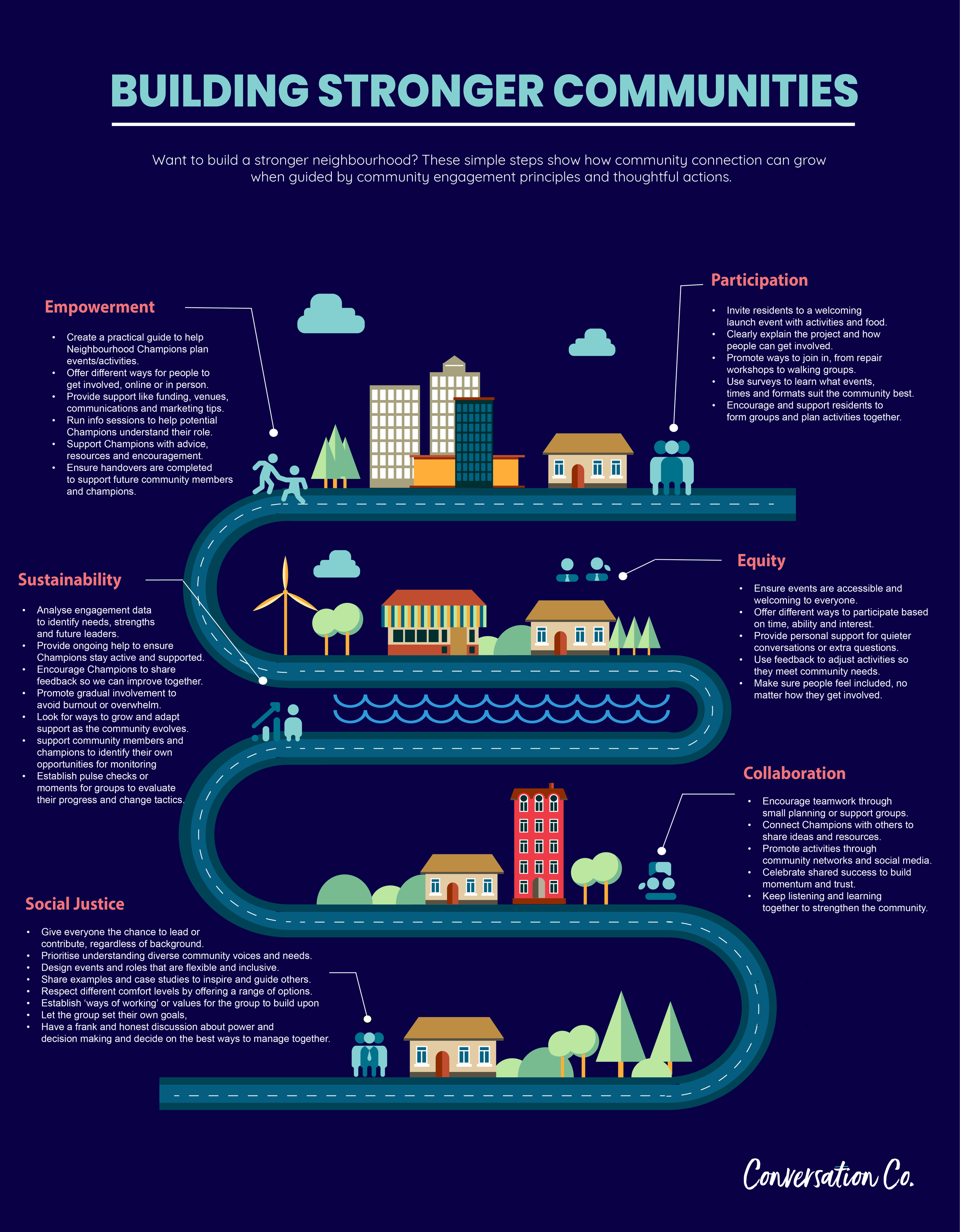
Download our Community Development resource here.
1. Start by Getting to Know the Community
Step 1: The First Connection
Launch with impact: A well promoted launch event can set the tone and showcase what you are trying to achieve. Make it accessible, inclusive, and inviting, think food everyone can enjoy, activities that spark conversation, and incentives that encourage people to come along.
Share the vision clearly: Let people know why you’re there, what you hope to achieve together, and the different ways they can get involved, from organising a walking group to helping run a community dinner, and so much more.
Step 2: Listen for Strengths and Needs
This is where community engagement comes in, to understand not only the strengths of the community but also their needs. Through this process we can identify the days and times people want to do things, what they are interested in doing and who has skills in these areas. We’re all busy, but all have a great deal of life experience and skills to share, so how can we make activities accessible to everyone?
Collect both stories and information about:
How connected people feel to their community.
When and where they’d prefer to gather.
What skills, interests, or resources they can share.
Who might be willing to step up as a local leader (Neighbourhood Champion).
Listening early helps make sure activities are at the right time, in the right place, and actually interesting to the people you’re trying to reach.
Step 3: Make Sense of What You’ve Heard
Bring together everything you’ve gathered, survey results, event feedback, one-on-one conversations, and map out:
The community’s strengths,
The main gaps or needs,
And who might be ready to lead in the next phase.
2. Empower Local Leaders
Step 1: Give Them the Tools
Create a clear, practical Neighbourhood Champion Guide that covers:
How to plan an event;
Budgeting basics;
Promotion tips;
How to book spaces and access support.
Include what’s on offer from you - funding, venues, marketing help, training, and opportunities to connect with others doing similar work.
Step 2: Invite and Connect
Use your earlier engagement data to invite people who showed interest in leading.
Host an info session to explain the role and support available.
Encourage small working groups so no one feels they have to do it alone.
Step 3: Walk Alongside Them
Offer guidance on planning and running events.
Help spread the word through newsletters, socials, and local networks.
Create opportunities for Champions to learn from and inspire each other.
3. Keep the Energy Going
Check in regularly with leaders to hear how they’re going and what they need.
Keep offering logistical and promotional support.
Keep an eye out for new leaders to bring into the fold so the group keeps growing and evolving.
4. Learn and Adapt as You Go
What to track:
Participation numbers;
Community satisfaction;
Number of new leaders stepping up.
How to keep improving:
Build in regular review points.
Adjust activities based on what’s working (and what’s not).
Keep feedback channels open and active.
Why this works
Because it balances structure with relationships. It’s about listening first, then creating space for people to lead, with the resources, support, and encouragement they need to succeed. When locals are empowered and supported, the result is a community that’s connected, confident, and capable of driving its own future.
Quotes from participants
In response to ‘What did you like most about this event?’
“Family atmosphere and free sausage, my daughter liked very much.”“Kids love the face painting.”
“The effort that I could see was put in.”
“Kids playing in the park with other kids they met.”
Let's connect – If you're working on a community development project, we’d love to hear about it. Reach out to us at hello@conversationco.com.au and let’s chat about how we can help bring local communities together.